Company news
Huasheng Medical Portable Medical All in One Health Kiosk : The Mobile Intelligence Node for Township Public Health Services
At a community health center in Fogang County, Guangdong, an unannounced transformation is underway—a seemingly ordinary compact unit is reconfiguring rural health management infrastructure. This Huasheng HS-S10 Portable Medical All in One Health Kiosk functions as a versatile sentinel, delivering technology-enabled care to remote populations and injecting unprecedented efficiency into township public health services.
Portable Deployment, Boundary-Free Service Delivery. Traditional physical examinations rely on bulky equipment fixed at designated sites, creating access barriers for elderly residents in remote villages. The HS-S10’s compact design resolves this challenge. Its ruggedized casing ensures environmental resilience during transit across rural terrain. Village medics can transport it effortlessly to clinics, households, or field sites—implementing a device-to-patient mobility model that transcends geographical constraints and bridges the last-mile coverage gap in health monitoring.
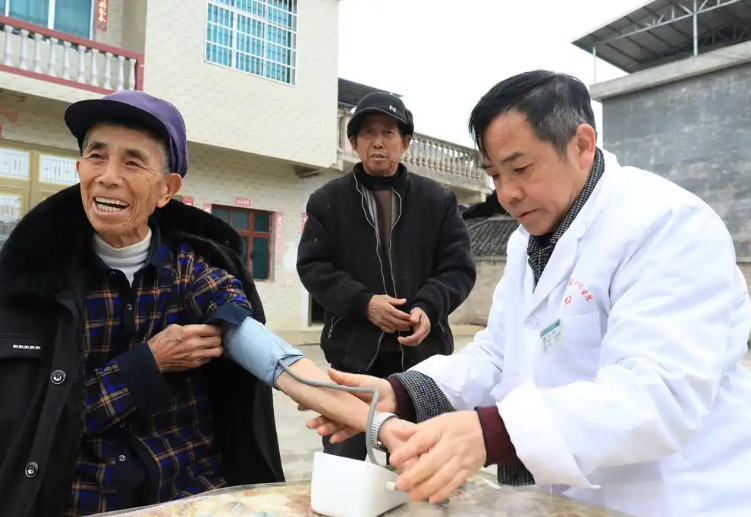
Single-Touch Precision. Designed for resource-constrained settings, the HS-S10 features a 10.1-inch touchscreen with voice guidance, enabling intuitive operation. Villagers obtain clinical-grade physiological metrics—including blood pressure, SpO₂, heart rate, body composition (fat mass/bone mass), and basal metabolic rate—through guided positioning or sensor placement. Automated ultrasonic height measurement with temperature compensation ensures environment-independent accuracy, democratizing precision testing for non-clinical operators as frontline health gatekeepers.
Comprehensive Multi-Parameter Monitoring. Portable Medical All in One Health Kiosk integrates 12+ diagnostic modalities into a single integrated health lab:
Vital Signs: Height/Weight/BMI, Core Temperature
Cardiovascular Metrics: SBP/DBP, Heart Rate, SpO₂
Body Composition: Fat/Water/Bone/Muscle Mass Ratios
Metabolic Indicators: Basal Metabolic Rate
A single assessment delivers a comprehensive health profile, enabling evidence-based chronic disease screening and interventions.
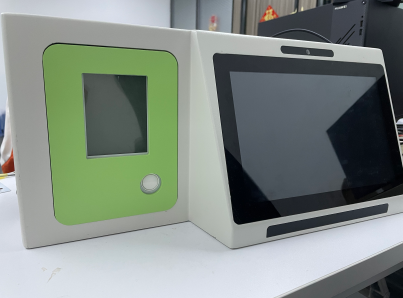
Data-Driven Governance Intelligence. Post-screening, the system auto-generates personalized reports and archives structured data to cloud EMR. This eliminates fragile paper records while establishing longitudinal health databases. Township administrators leverage population-level analytics to optimize resource allocation for disease prevention. Clinicians remotely track patient trajectories for precision health management—interoperable data infrastructure advances rural health governance into the data-driven era.
Categories
Latest News
- Integrated Health Machine: Reshaping the Smart Service Ecosystem of TCM Wellness Centers
- Integrated Health Management Kiosk: The Core Engine for Pharmacy Transformation into Smart Health Services
- Blood Bank Self-Check-In Healthcare Medical Kiosks: Innovative Practices and Core Values of Basic Screening
- A New Line of Defense for Campus Health: The Value and Advantages of the Integrated Health Kiosk
- AI Evaluation Self Service Tele-Health & Tele-Medicine Health Kiosk: An Innovative Engine for Insurance Company Marketing and Member Services
Contact Us
Company: Shenzhen Huasheng Medical Technology Co., Ltd.Contact: Miss Wang
Tel: +86 159 8911 4474
WhatsApp 1: +86 177 2472 6642
WhatsApp 2: +86 198 6570 7933
Email: wincywang@hsyil.com
Address: Room 406, Danfeng Technology Building, Building 2, Chaguang Village Industrial Park, Shuguang Community, Xili Street, Nanshan District, Shenzhen
 Tel:
Tel: