Company news
Self-Check-In Healthcare Medical Kiosks: An Intelligent Solution for Sub-health Management
In today's fast-paced life, sub-health has become a significant issue affecting people's quality of life. Self-Check-In Healthcare Medical Kiosks, as a type of integrated health monitoring equipment, are gradually becoming a core tool for sub-health management. By integrating multiple detection functions, these devices can provide users with comprehensive and convenient health data, facilitating scientific sub-health management.
The Self-Check-In Healthcare Medical Kiosks are typically equipped with advanced biosensor technology, enabling rapid detection of multiple physiological indicators. For example, they can measure basic physiological parameters such as blood pressure, blood sugar, blood lipids, and heart rate, and can also analyze body composition to understand information such as body fat percentage, muscle mass, and bone density. This real-time data collection provides accurate evidence for sub-health management, allowing users to promptly understand their own health status.
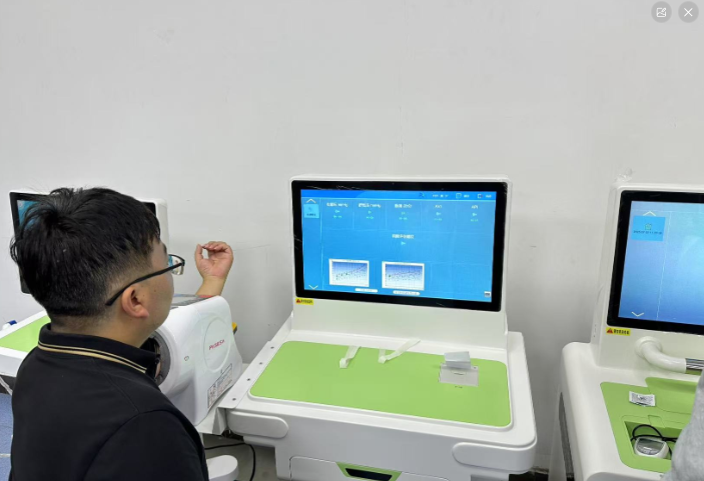
The intelligent data analysis function of the Self-Check-In Healthcare Medical Kiosk is key to achieving sub-health management. The device's built-in algorithms comprehensively analyze the collected health data to generate personalized health assessment reports. These reports not only identify the user's sub-health risk factors but also provide targeted improvement suggestions, such as dietary adjustments and exercise plans. This personalized health guidance makes sub-health management more scientific and effective.
In terms of ease of use, the Self-Check-In Healthcare Medical Kiosk has a significant advantage. It is simple to operate; users only need to follow the prompts to complete the corresponding testing procedures, finishing the entire process in minutes. Furthermore, the Self-Check-In Healthcare Medical Kiosk supports cloud storage and synchronization of data, allowing users to view their health data and historical records anytime via a mobile app. This facilitates long-term tracking of changes in health status and timely adjustments to the sub-health management plan.
The Self-Check-In Healthcare Medical Kiosk also boasts powerful health early warning capabilities. When it detects an abnormality in a user's physiological indicators, the device promptly issues an alert, reminding the user to pay attention to their health and take appropriate measures. This proactive health intervention effectively prevents sub-health conditions from developing into diseases, safeguarding the user's health.
Furthermore, the Self-Check-In Healthcare Medical Kiosks can share data with medical institutions, providing valuable information for doctors' diagnoses. By reviewing long-term health data on the kiosk, doctors can gain a more comprehensive understanding of the patient's health status and develop more precise treatment and rehabilitation plans. This integrated medical and health model further enhances the effectiveness of sub-health management.
Self-Check-In Healthcare Medical Kiosks have broad application prospects in communities, businesses, and homes. In community health service centers, they provide residents with convenient health monitoring services, helping community doctors better manage sub-health conditions. In businesses, these machines monitor employee health, improving work efficiency and quality of life. In homes, they act as health managers for family members, making sub-health management more convenient and efficient.
In short, Self-Check-In Healthcare Medical Kiosks offer a comprehensive solution for sub-health management by integrating detection, analysis, early warning, and intervention functions. With continuous technological advancements, Self-Check-In Healthcare Medical Kiosks will play an increasingly important role in the field of sub-health management, helping more people achieve their health goals.
Categories
Latest News
- Integrated Health Machine: Reshaping the Smart Service Ecosystem of TCM Wellness Centers
- Integrated Health Management Kiosk: The Core Engine for Pharmacy Transformation into Smart Health Services
- Blood Bank Self-Check-In Healthcare Medical Kiosks: Innovative Practices and Core Values of Basic Screening
- A New Line of Defense for Campus Health: The Value and Advantages of the Integrated Health Kiosk
- AI Evaluation Self Service Tele-Health & Tele-Medicine Health Kiosk: An Innovative Engine for Insurance Company Marketing and Member Services
Contact Us
Company: Shenzhen Huasheng Medical Technology Co., Ltd.Contact: Miss Wang
Tel: +86 159 8911 4474
WhatsApp 1: +86 177 2472 6642
WhatsApp 2: +86 198 6570 7933
Email: wincywang@hsyil.com
Address: Room 406, Danfeng Technology Building, Building 2, Chaguang Village Industrial Park, Shuguang Community, Xili Street, Nanshan District, Shenzhen
 Tel:
Tel: