Company news
AI Evaluation Self Service Tele-Health & Tele-Medicine Health Kiosk: Deep Integration of Functions and Scenarios
As a crucial piece of equipment in the modern healthcare field, the AI Evaluation Self Service Tele-Health kiosk integrates diverse data collection functions and a wide range of application scenarios, gradually becoming an indispensable core tool in the health management system. Tele-Health kiosks typically possess multiple functions, including vital sign data collection, biochemical indicator testing, and imaging data acquisition, providing comprehensive support for health management in various scenarios.
In community health service centers, Tele-Health kiosks play a key role. Community residents can use the kiosk for routine physical examinations, such as measuring basic indicators like blood pressure, blood sugar, and blood lipids. The device automatically records and analyzes the data, establishing personal health records for residents. Community doctors can then use the data provided by the kiosk to promptly identify residents' health risks, develop personalized health intervention plans, and effectively improve the level of community health management.
Township health centers, as crucial nodes in primary healthcare services, also widely utilize Tele-Health kiosks. Due to the relative scarcity of medical resources in rural areas, these machines help township doctors quickly grasp patients' basic health conditions, providing vital references for disease diagnosis and treatment. For example, when treating patients with common illnesses, the Tele-Health kiosk collects data such as body temperature, heart rate, and blood oxygen levels. Combined with the patient's symptoms, doctors can more accurately assess the condition, improving diagnostic and treatment efficiency.
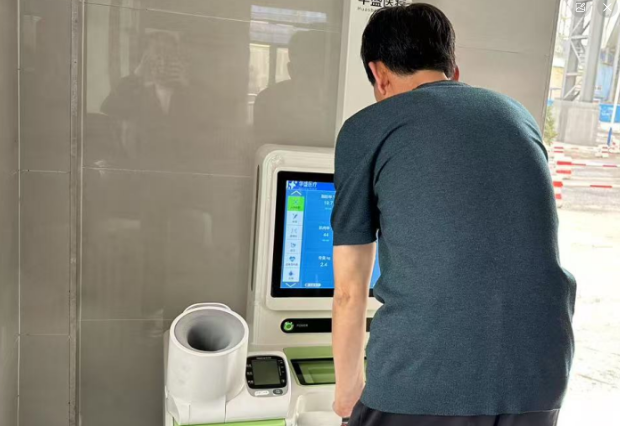
Employee health management in enterprises is another important application scenario for Tele-Health kiosks. Many companies install these machines in their factory or office areas to ensure employee health. Employees can use these machines during work breaks to monitor their physical indicators and understand their own health status. By collecting data from these machines, companies can analyze overall employee health trends and conduct targeted health lectures, fitness activities, etc., creating a healthy work environment and reducing employee absenteeism due to illness.
In elderly care facilities, Tele-Health kiosks provide convenient health monitoring for the elderly. For seniors with limited mobility, Tele-Health kiosks can regularly collect their health data, such as blood pressure and electrocardiograms. Caregivers can monitor the elderly's health status in real time through these machines, taking timely measures to ensure their safety and well-being if any abnormalities are detected. Simultaneously, the machines can also synchronize data with the elderly's families, allowing them to stay informed about their parents' health.
The introduction of Tele-Health kiosks into school clinics has significantly improved the efficiency of student health management. Students can complete data collection through Tele-Health kiosks during enrollment physical examinations and daily health monitoring. School doctors can analyze the data from these machines to assess students' growth and development, common illnesses, and other factors, providing a basis for health education and supporting students' healthy growth.
Large sports stadiums and fitness centers are also beginning to equip themselves with Tele-Health kiosks. Before exercising, sports enthusiasts can use Tele-Health kiosks to assess their physical function, such as cardiopulmonary function and muscle strength. Based on the assessment results, fitness coaches can develop scientific and reasonable exercise plans for enthusiasts, preventing sports injuries and improving exercise results.
In telemedicine services, Tele-Health kiosks are indispensable. Patients in remote areas can use these machines to collect their health data and transmit it to remote experts. Experts then use the data to provide diagnosis and treatment guidance, enabling the sharing of high-quality medical resources and alleviating the shortage of medical resources in remote areas.
With its rich data collection functions and wide range of applications, Tele-Health kiosks are changing traditional health management models. Whether in communities, towns, enterprises, elderly care institutions, schools, sports stadiums, or telemedicine settings, integrated health management machines are safeguarding people's health and becoming an important force in promoting the construction of a healthy China.
Categories
Latest News
- Integrated Health Machine: Reshaping the Smart Service Ecosystem of TCM Wellness Centers
- Integrated Health Management Kiosk: The Core Engine for Pharmacy Transformation into Smart Health Services
- Blood Bank Self-Check-In Healthcare Medical Kiosks: Innovative Practices and Core Values of Basic Screening
- A New Line of Defense for Campus Health: The Value and Advantages of the Integrated Health Kiosk
- AI Evaluation Self Service Tele-Health & Tele-Medicine Health Kiosk: An Innovative Engine for Insurance Company Marketing and Member Services
Contact Us
Company: Shenzhen Huasheng Medical Technology Co., Ltd.Contact: Miss Wang
Tel: +86 159 8911 4474
WhatsApp 1: +86 177 2472 6642
WhatsApp 2: +86 198 6570 7933
Email: wincywang@hsyil.com
Address: Room 406, Danfeng Technology Building, Building 2, Chaguang Village Industrial Park, Shuguang Community, Xili Street, Nanshan District, Shenzhen
 Tel:
Tel: