Company news
Smart Guard Right by Your Side: Huasheng Medical All-in-One Health Kiosk, Empowering a New Lifestyle in Community Health
In today's fast-paced world, health has become everyone's most valuable asset. This is especially true for community residents, particularly the elderly, individuals with chronic conditions, and busy office workers. For them, accessing basic health metrics and managing their daily health conveniently and efficiently has become increasingly important. Traditional health monitoring often requires frequent visits to hospitals or check-up centers, which can be time-consuming and labor-intensive. However, with advancements in technology, an intelligent health management terminal—the all-in-one health kiosk—is quietly making its way into communities, becoming a "guardian of health right at their doorstep" for residents.
As the name suggests, an all-in-one health kiosk is an intelligent self-service device that integrates multiple basic health detection functions into a single unit. It is typically deployed in high-traffic and easily accessible locations such as community service centers, elderly care stations, and property management lobbies, making it extremely convenient for residents to conduct routine health monitoring.
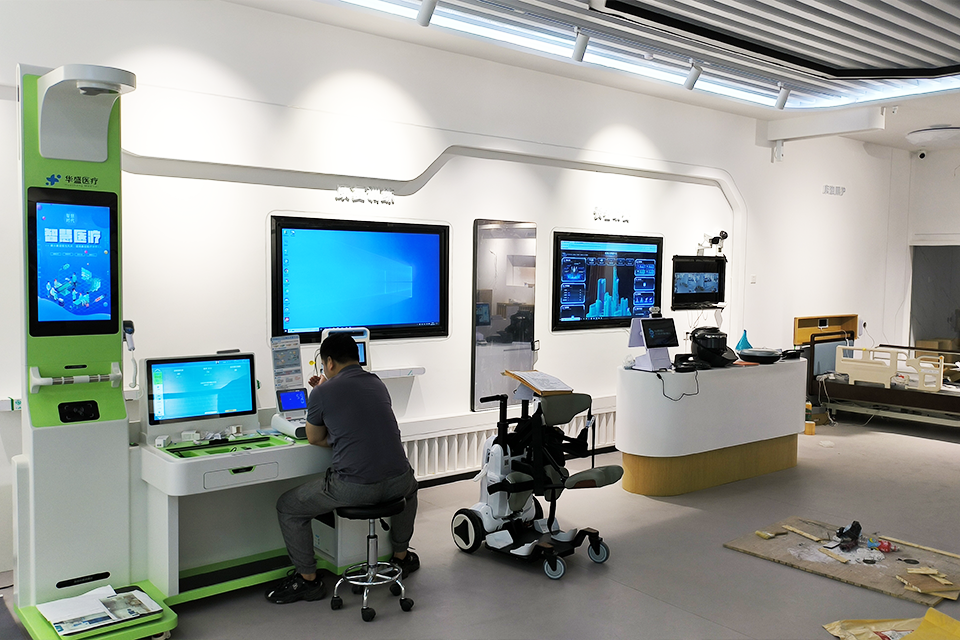
So, what conveniences can this seemingly compact machine bring to community residents?
"One-Stop" Basic Vital Signs Monitoring: This is the core function of the all-in-one health kiosk. Residents, guided by the device's instructions, can simply operate it to complete self-service measurements of multiple basic physiological parameters within a short time (usually just a few minutes). These parameters include height, weight, body temperature, blood pressure, blood oxygen saturation, blood glucose (supported by some models), and electrocardiogram (ECG) (supported by some models). This eliminates the need for queuing and registration, saving both time and effort.
Effortless Health Record Management: Advanced all-in-one health kiosks are often equipped with an information management system. Residents can log in by swiping their ID card, medical insurance card, or using facial recognition. The device automatically records each measurement, creating a personalized electronic health record. This not only allows residents to easily review their historical data and track health trends (such as fluctuations in blood pressure or blood sugar) but also provides valuable data support for community health management.
Health Assessment and Risk Alerts: Based on the collected data, the built-in intelligent analysis system of the health kiosk can quickly generate a preliminary health assessment report and issue risk alerts for abnormal indicators. For instance, if blood pressure remains consistently high or blood sugar levels are abnormal, the device will prominently display alerts recommending further attention or medical consultation, serving as an early warning system.
Health Education Platform: The device's screen also serves as a window for disseminating health knowledge. During waiting times between tests or in idle periods, residents can browse built-in graphic and video content on health education, learning about disease prevention, balanced diets, scientific exercise, and more, thereby enhancing their health literacy.
For communities, the value of introducing all-in-one health kiosks is multifaceted:
Improving Accessibility to Health Services: These kiosks enable residents to access basic health examination services without leaving their communities. This is particularly significant for elderly individuals with limited mobility, as it helps fill gaps in community medical resources.
Promoting Granular Health Management: Community staff can leverage backend data (while strictly protecting privacy) to gain insights into the overall health baselines and chronic disease distribution among residents. This enables them to organize more targeted activities such as health workshops and free clinics.
Reduced Healthcare Costs: Daily monitoring helps residents better manage their health, identify potential risks early, and reduce the incidence of emergencies and serious illnesses, ultimately reducing the long-term medical burden on individuals and society.
Strengthening Community Cohesion: Health kiosk locations often serve as places where residents share health experiences and care for one another, fostering a sense of neighborhood connection and community belonging.
Looking ahead, the application prospects of integrated health kiosks in communities are vast. With technological advancements and improved functionality, they are likely to integrate more testing options (such as bone density and Traditional Chinese Medicine constitution identification), and integrate more closely with family doctor services and telemedicine consultations, truly building a community-based, resident-centered, full-cycle health management network.
In short, the emergence of integrated health kiosks is a vivid example of how technology is empowering grassroots health services. More than just a testing device, they serve as an intelligent bridge connecting residents, communities, and health services. Making health management accessible, fostering health awareness, and enabling every community resident to more conveniently protect the health of themselves and their families—this is precisely the crucial role that integrated health kiosks play in building healthy communities and a healthy China. Embracing them means embracing a smarter, more convenient, and more secure way of living.
Categories
Latest News
- Integrated Health Machine: Reshaping the Smart Service Ecosystem of TCM Wellness Centers
- Integrated Health Management Kiosk: The Core Engine for Pharmacy Transformation into Smart Health Services
- Blood Bank Self-Check-In Healthcare Medical Kiosks: Innovative Practices and Core Values of Basic Screening
- A New Line of Defense for Campus Health: The Value and Advantages of the Integrated Health Kiosk
- AI Evaluation Self Service Tele-Health & Tele-Medicine Health Kiosk: An Innovative Engine for Insurance Company Marketing and Member Services
Contact Us
Company: Shenzhen Huasheng Medical Technology Co., Ltd.Contact: Miss Wang
Tel: +86 159 8911 4474
WhatsApp 1: +86 177 2472 6642
WhatsApp 2: +86 198 6570 7933
Email: wincywang@hsyil.com
Address: Room 406, Danfeng Technology Building, Building 2, Chaguang Village Industrial Park, Shuguang Community, Xili Street, Nanshan District, Shenzhen
 Tel:
Tel: